


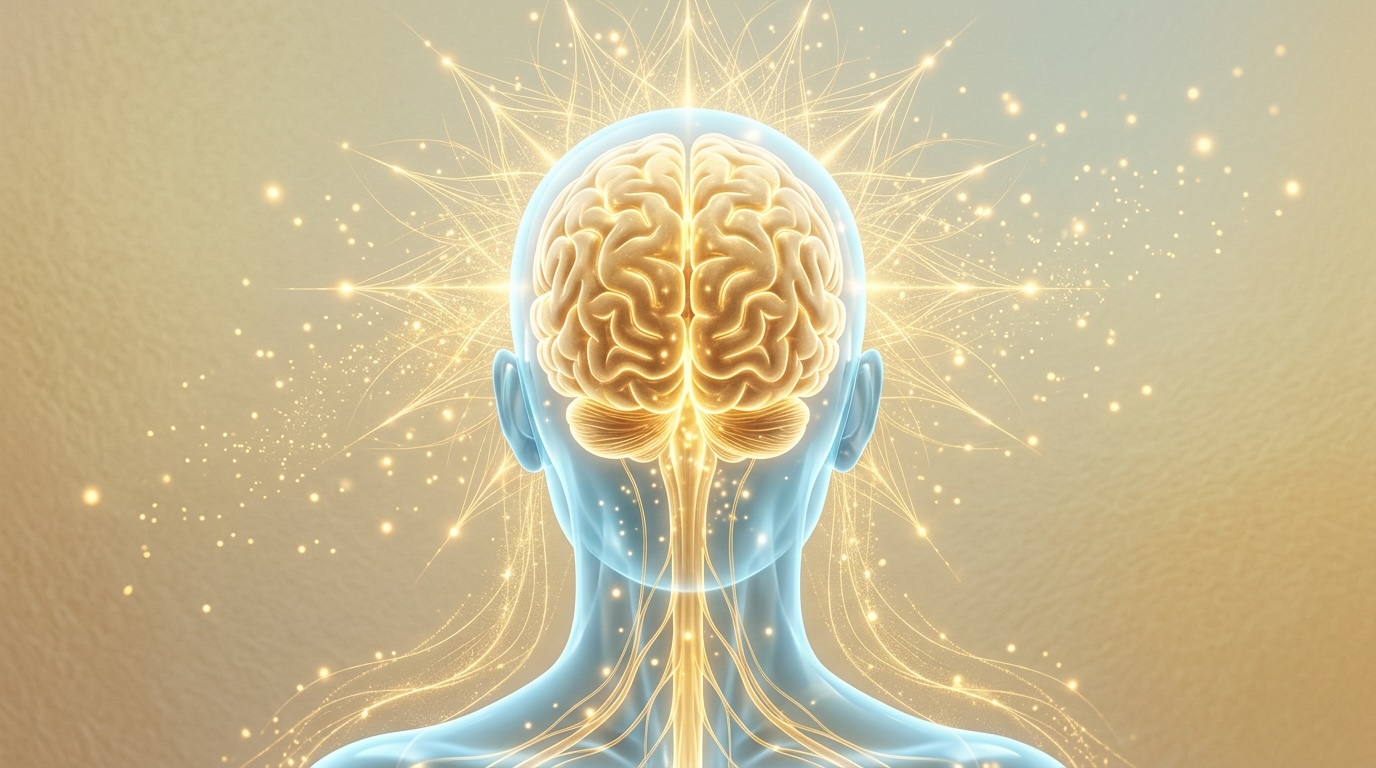
Brain fog during menopause is not in your head — well, actually, it is, and now we have the imaging to prove it. New research shows menopause measurably changes brain structure, and the recovery story is just as interesting as the disruption.
Here is what the science actually says, why hot flashes matter more than we thought, and what the evidence suggests about your brain's remarkable capacity to reorganize itself.
Brain fog during menopause has a structural basis — imaging studies show changes in gray and white matter during the transition, with hot flashes linked to additional white matter disruption, though the brain shows evidence of partial recovery afterward.
What's Actually Happening
During the menopause transition, imaging research has documented measurable reductions in gray matter volume in brain regions associated with memory and decision-making. This is not a vague or anecdotal finding — structural MRI studies have captured it directly, offering a neurological explanation for the cognitive shifts many women experience during perimenopause and early menopause.
White matter integrity also takes a hit, and here is where hot flashes enter the picture. Research has linked more frequent and severe hot flashes to greater white matter disruption, suggesting that the vasomotor symptoms (aka "hot flashes" and "night sweats") many women try to push through may have downstream effects on brain tissue health. Early menopause appears to compound this risk.
The fog has a neurological explanation, and the explanation comes with a recovery arc. That is not a small thing.
Why This Matters for You
Understanding that cognitive changes during menopause have a measurable structural basis matters because it reframes the experience entirely. This is not a character flaw, a sign of early cognitive decline, or anxiety in disguise — it is a documented neurological transition happening in parallel with your hormonal one.
The recovery finding is equally important: evidence points to partial gray matter restoration after menopause, which suggests the brain is not passively enduring this transition but actively reorganizing through neuroplasticity. That is a meaningful distinction.
What You Can Actually Do
- Track your hot flashes with intention — Because vasomotor symptoms are now linked to white matter changes, discussing their frequency and severity with your doctor gives you both better data for decision-making about symptom management.
- Prioritize sleep as a neurological tool — Sleep is when the brain consolidates memory and clears metabolic waste; protecting it during the menopause transition supports the same systems that are under structural pressure.
- Engage in cognitively stimulating activity — Neuroplasticity research consistently shows that learning new skills, complex problem-solving, and social engagement support gray matter maintenance and recovery across the lifespan.
Q&A with the Coach
Should I be worried if I am experiencing significant brain fog during perimenopause?
Brain fog during this transition has a measurable neurological basis, so experiencing it is not a red flag for disease — it is evidence of a real structural process. That said, if cognitive changes feel severe or are impacting your daily function significantly, that is absolutely worth raising with your doctor.
Is the brain recovery after menopause guaranteed?
The research points to partial gray matter recovery, not full restoration, and it is not a guaranteed outcome for every woman — but the existence of a recovery arc is a meaningful and hopeful finding grounded in real imaging data.
Does the type of menopause — natural versus surgical — affect brain impact?
Surgical menopause, which causes a more abrupt hormonal drop, may have a more pronounced effect on brain tissue than a gradual natural transition, and this is an area of ongoing research. If you have had a surgical menopause, it is a relevant detail in conversations with your doctor about brain health.
Can changing my lifestyle actually make a difference to brain recovery?
Aerobic exercise, consistent sleep, and cognitively engaging activity all have evidence behind them for supporting neuroplasticity and gray matter maintenance — these are not soft suggestions but interventions with measurable effects in the research.
What is the hormone therapy connection to brain health?
Estrogen appears to play a role in maintaining brain tissue, and the conversation about hormone therapy and neuroprotection is growing more nuanced — but it is highly individual, and any decision belongs in a conversation with your own healthcare provider who knows your full history.
Brain fog during menopause has always had a structural story behind it — science has just recently developed the tools to see it clearly. Gray matter changes in memory and decision-making regions are measurable, and the recovery arc that follows menopause is equally real.
That combination — real disruption, real recovery — is worth holding onto when the fog feels permanent. It is not.
What do you think?
If this kind of grounded, no-fluff health content is useful to you, the new30 newsletter is where we go deeper. Join us.
Inspired by The Menopause Society
Scientifically backed by: Scientific Reports (Nature) — Menopause impacts human brain structure, connectivity, energy metabolism, and amyloid-beta deposition (2021):
Created with AI assistance