


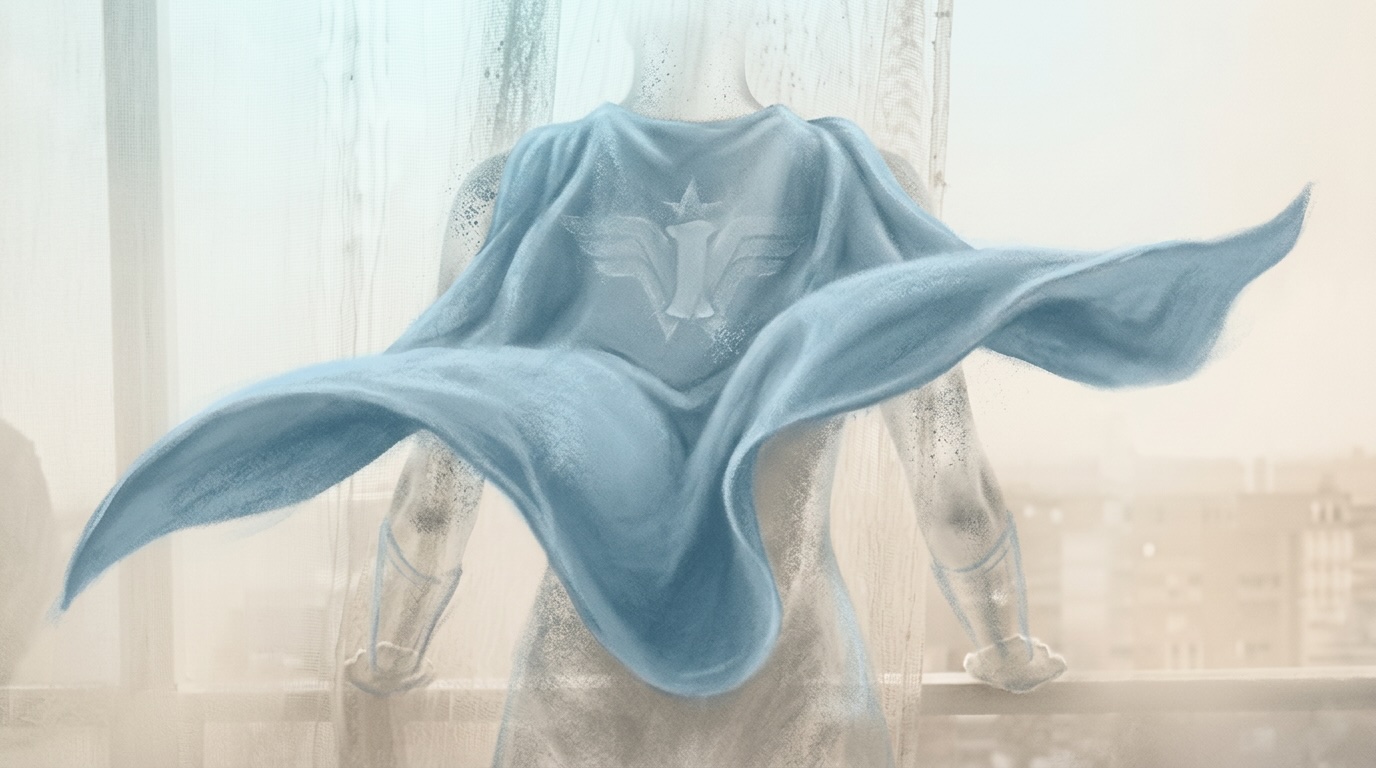
You walk into a room and feel like the wallpaper. It is annoying, yes — but chartered psychologists say it might also be the most useful thing that has ever happened to you.
This piece unpacks why that sense of invisibility is a psychological threshold, and what research says about what becomes possible on the other side of it.
Feeling invisible in your 40s and 50s is a documented psychological experience linked to shifting social roles and identity transitions. Experts frame it not as a loss but as an opening — one many women use to redirect toward more purposeful lives.
What's Actually Happening
Psychologists who specialise in adult development describe a recognisable pattern in women's 40s and 50s: a period where the identity structures built through early adulthood — career climbing, caregiving, fitting in — start to feel ill-fitting or simply finished. This is not a crisis in the clinical sense. It is a developmental transition that research has been tracking for decades.
Erik Erikson's model of psychosocial development placed midlife at the stage of generativity versus stagnation — the point where the core question shifts from what do others need from me to what do I actually want to generate in the world. Contemporary psychologists are building on that foundation with more granular, women-specific research, and a recurring theme runs through it: this threshold tends to be generative, not terminal.
When the world stops projecting its expectations onto you quite so loudly, you finally get to hear yourself think. That is not invisibility. That is an opening.
Why This Matters for You
The social experience of feeling invisible is real and worth naming honestly. Research on ageism confirms that women face a specific double bind where both age and gender can compound social invisibility — and that experience is not a personal failure or an exaggeration. And it's worth saying plainly: this is not free. Research links gendered ageism and age discrimination to higher rates of depression and loneliness in midlife and older women — the invisibility is real, and for many it genuinely hurts before it opens anything. The reframe that follows isn't an automatic upgrade handed to you at 50. It's something women build on the other side of a real loss. What psychologists want women to know is that the internal shift happening alongside that external experience is often the more significant one.
When social performance pressure decreases — even when that decrease comes from being overlooked rather than chosen — the psychological result can be a kind of clarity. As women move through their 40s and 50s, research finds that anxiety about appearance and others' judgment tends to ease — part of a broader shift psychologists call the aging "positivity effect," where emotionally meaningful priorities start to outrank social performance. Many women describe what's left as a kind of clarity. That is the reinvention window opening.
What You Can Actually Do
- Audit your energy, not your schedule — Notice which commitments leave you feeling expanded and which ones leave you depleted. Psychologists describe this audit as a practical identity tool that surfaces what you actually value versus what you have inherited.
- Find one person who is already living it — Research on adult identity development highlights social modelling as a well-supported catalyst. Finding a woman slightly ahead of you who is living with more intention is one of the more reliable ways to make reinvention feel possible rather than abstract.
- Write the sentence you have not said out loud yet — Psychologists who work with midlife women frequently use this prompt: complete the sentence, what I actually want now is. The act of writing it, even privately, begins the process of treating it as real.
Q&A with the Coach
Is the feeling of invisibility something that gets better on its own?
For many women it shifts naturally as the identity transition progresses, but psychologists suggest that engaging with it intentionally — rather than waiting it out — tends to produce better outcomes. The transition happens either way; what changes is whether you direct it.
Can reinvention happen while you are still in the middle of caregiving or career demands?
Yes, and it often has to — psychologists describe reinvention as a reorientation that can begin in the margins of a busy life, through small acts of self-backing and honest reflection, rather than requiring a clean slate. Waiting for the right circumstances is one of the most common ways this window goes unused.
What role does therapy play in midlife reinvention?
A significant one for many women — a psychologist or therapist with adult development experience can help you distinguish what you genuinely value from what you have inherited, and make the transition less disorienting. It is not a requirement, but the research on guided identity work in midlife is consistently positive.
Why do psychologists describe backing yourself in midlife as rebellious?
Because the cultural expectation for women in this age range has historically been to contract — to need less, want less, take up less space. Choosing to do the opposite, to invest in what you actually want to build, runs directly counter to that script, which is precisely what makes it quietly powerful.
How do I explain this transition to a partner who does not understand what is shifting in me?
Framing it as a developmental transition rather than a personal dissatisfaction can help — this is something that happens to women in midlife, not something happening to your relationship. Sharing what you are reading and reflecting on together tends to work better than trying to explain the whole thing in one conversation.
Feeling invisible in your 40s and 50s is a real experience and a documented psychological threshold. What psychologists want you to know is that the disorientation has a direction — and the women who engage with it on purpose, rather than waiting it out, often find that what's on the other side is the most deliberate, most theirs, decade yet.
The wallpaper moment might be exactly where it starts.
What do you think?
If this landed somewhere real, there is more where it came from. Sign up for the new30 newsletter and get research, perspective, and the occasional quietly rebellious idea delivered straight to you!
Inspired by HELLO! Magazine
Scientifically backed by: Journal of Adult Development – Middle Aging in Women: Patterns of Personality Change from the 30s to the 50s
Created with AI assistance