


Quick test. Name three things you've failed at this year.
Now, name three wins from the last month.
Slower, right? That lag isn't a confidence flaw you were born with. It's how the brain is built, and at midlife, when you're rewriting who you are for the decades ahead, it can sabotage the changes you're trying to make.
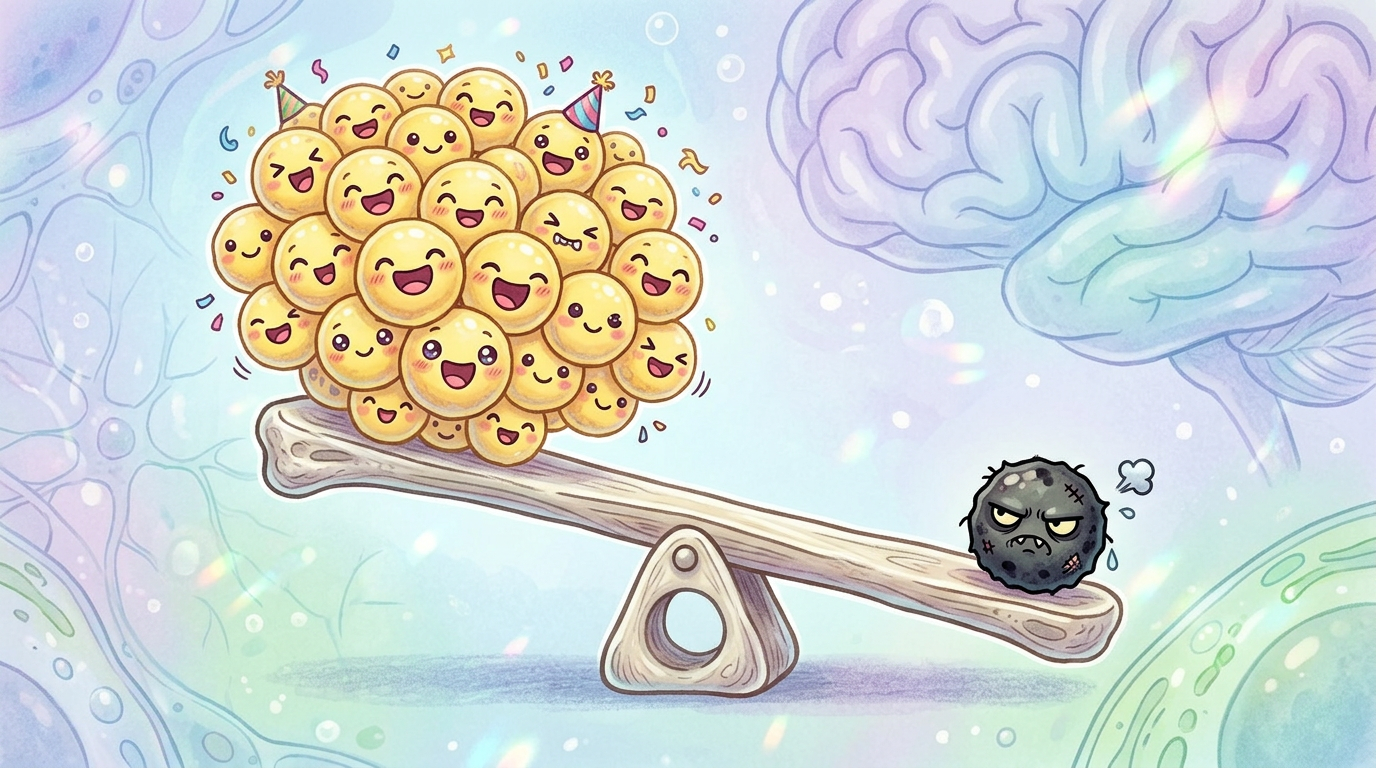
The brain registers negative events more powerfully than positive ones, so setbacks stick and wins evaporate. Deliberately tracking your strengths and small wins counteracts that bias and is linked to better follow-through on the changes you want to make.
1. Your failures have better memory than your wins
There's a landmark paper titled, simply, "Bad Is Stronger Than Good." Reviewing decades of research, the authors found that across everyday events, big life events, relationships, and learning, bad consistently carries more weight than good. Bad feedback lands harder than praise, and the self is more motivated to avoid bad self-definitions than to chase good ones. (Baumeister et al., 2001)
So you're not broken for remembering the diet you quit in March more vividly than the four months you cooked at home. But in your 40’s, when you're reconsidering your career, your body, and who you want to be next, a brain that files every stumble and shrugs off every win hands you a distorted picture of your own progress. Skip two workouts and the story isn't "I missed two workouts," it's "I'm someone who can’t keep a habit" or even worse, "I'm someone who fails." The slip stops being an event and becomes an identity. The fix isn't willpower. It's changing what you can see.
Skip two workouts and the story isn't "I missed two workouts," it's "I'm someone who can’t keep a habit" or even worse, "I'm someone who fails." The slip stops being an event and becomes an identity.
2. Thoughts are just thoughts, you can make a choice to reframe
Deliberately reframing a situation to change its emotional charge. Instead of "I always quit," you reword it to something positive but true. Now, "I always quit" becomes "I showed up two days out of seven” or “I haven't found the method that fits me yet." See the difference?
This isn't positive thinking. Cognitive reappraisal is one of the most studied emotion-regulation strategies in psychology, consistently ranked among the most effective and linked to better wellbeing. (reappraisal research overview) And a meta-analysis of nearly 30,000 people found self-compassion positively associated with health-promoting behaviour. (Phillips & Hine, 2021) The effect is modest but real: treat yourself as someone worth the effort, and you're more likely to make it.
3. Swap "should" for what you actually value
Notice how much self-talk runs on "should." I should eat better. I should exercise. "Should" is temporary motivation that runs out fast. Self-determination theory distinguishes motivation that's forced from motivation rooted in your own values. An analysis of 184 data sets found behavior change is more effective and lasting when people act from personal values rather than pressure. (Ng et al., 2012)
So maybe it’s time we reverse-engineer that "should." You don't just want to eat better because you should. You want the energy to keep up with the life you want to live. "I value having energy for the next twenty years, so I choose to eat healthy" outlasts "I should" every time.
Q&A with the Coach
Isn't focusing on my wins just letting myself off the hook?
The opposite. You already track every failure automatically. Logging wins corrects a the brain distortion so you can more clearly see what's working and do more of it.
I genuinely can't think of any wins. What then?
Lower the bar until something qualifies. You noticed a craving instead of acting on autopilot. You went to bed twenty minutes earlier. "Small" is the point.
How is reframe different from lying to myself?
A reframe has to be true. "I'm crushing it" when you're not is a lie your brain rejects. "I showed up twice and I'm still figuring out what works" is accurate and workable.
Why does this matter more at midlife than at 25?
This is when many women change in some way, they are likely rebuilding their career, body, or identity. Change means setbacks, and if every setback reads as failure, you'll quit the reinvention before it takes hold.
Do I need to do all three?
No. Start with the wins list, it's the fastest to feel. Pick the one you'll actually do this week over the perfect system you'll abandon by Friday.
You're not lazy or bad at follow-through. You're running a brain that remembers your stumbles in detail and lets your wins fade from the foreground. Shift in what you let yourself notice, and you’ll see a shift in your mindset and actions. See your progress, and a bad week stays a bad week. It stops being who you are.
What do you think?
About the Author

I'm Leah Horgan, a certified health coach at Forward Momentum who works with women navigating exactly this kind of midlife rebuild. I relate to this article personally: a layoff and an injury once took my stability, my body, and my confidence, and rebuilding taught me that lasting change starts with how you see yourself, not another quick fix. If this article landed, book a free 15-minute discovery call and we'll see if we're a fit.
Sign up for the new30 newsletter and get research-backed, peer-level conversations about identity, hormones, and purpose delivered straight to your inbox.
References:
PubMed: Self-Determination Theory Applied to Health Contexts: A Meta-Analysis
Sage Journals: Bad is Stronger than Good
Harvard Business Review: The Power of Small Wins
Science Direct: Cognitive emotion regulation strategies, alexithymia and dissociation in schizophrenia, a review and meta-analysis
PubMed: Self-compassion, physical health, and health behaviour: a meta-analysis
Created with AI assistance